
Marine stainless steel mooring rings (eye bolts with round rings) are essential heavy-duty mooring fittings widely deployed on piers, wharves and vessel decks. Working together with bollards, these components secure ships against wind, tidal current and wave forces during berthing operations.
The mooring ring is connected to mooring ropes or chains. When the vessel arrives at the berth, crew route mooring lines through the stainless steel ring and fasten the line onto the shore bollard. The ring acts as a flexible transition point: it distributes tension evenly, reduces sharp-angle friction between the rope and bollard, absorbs dynamic shock loads caused by waves and vessel drifting, and prevents sudden rope breakage. Unlike direct contact between ropes and bollards, the smooth rounded ring avoids cutting or fraying mooring lines, stabilizes pulling force in multi-directional loads, and improves overall mooring safety.
1. Raw Material Selection: Marine grade stainless steel (304 / 316L) bar stock is selected for outstanding saltwater corrosion resistance.
2. Hot Forging: Steel rods are heated and forged to form the integral circular ring and threaded shank. Forging eliminates internal voids and guarantees high tensile strength.
3. Machining: Precision turning for full thread processing on the bolt shank, ensuring accurate fit for installation.
4. Surface Finishing: Polishing to remove burrs, smooth all sharp edges.
5. Load Testing & Inspection: Each batch undergoes destructive load testing and visual inspection. Products for international marine projects can apply for ABS, DNV or other marine classification society certification.
6. Packing: Packed in wooden cases to avoid scratches and deformation during ocean transit.
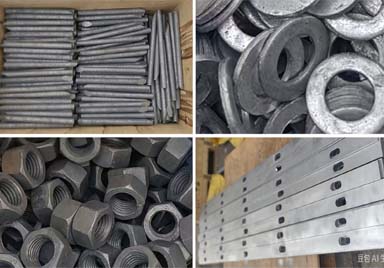
1. Pre-drill matching holes on the deck, quay base or mounting plate.
2. Pass the threaded bolt through the hole.
3. Secure with heavy-duty nuts and lock washers on the rear side, tighten to specified torque.
4. Double-check fastening tension before mooring operation.
Note: Installation surface must be solid steel or reinforced concrete. After installation, regular inspection for nut loosening, corrosion and ring deformation is required.
· Port & terminal berthing system: cargo ships, tankers, container vessels
· Offshore platforms, floating docks, yacht marinas
· Ship deck fixed tie-down points
· Aquaculture floating net cages, buoy mooring systems
· Emergency temporary mooring for working vessels
Superior saltwater corrosion resistance (316L grade performs well in coastal, high salinity environment)
Smooth polished surface, low abrasion to mooring ropes
Forged one-piece structure, high breaking load, excellent shock resistance
Simple installation and easy replacement
Low maintenance, long service life
Compatible with major marine classification society certification for international shipping projects
Higher material cost compared with hot-dip galvanized carbon steel mooring fittings
Under extreme overload, permanent deformation may occur
Long-term exposure to marine fouling requires routine cleaning
Thread sections need periodic inspection for corrosion in harsh offshore environments


Copyright © Whale Marine Product Co.,Ltd. All Rights Reserved | Sitemap| Powered by 